
Feline Hearing Loss: What Every Cat Parent Should Know
Feline Hearing Loss: What Every Cat Parent Should Know — and What You Can Do About It
Hearing loss in cats is far more common than most pet parents realize—and because cats are exceptionally good at adapting, it often goes unnoticed.
As a lifelong animal sound researcher and the founder of Pet Acoustics Inc., I speak with many loving cat families who are surprised to learn that changes in hearing can quietly influence behavior, stress levels, and overall quality of life.
Here’s what every cat parent should know—and what you can do right now to help.
Yes—Cats Can Lose Their Hearing
Cats can experience partial or complete hearing loss at any age, but it becomes increasingly common as they grow older.
Some of the most common contributors include:
natural age-related degeneration
chronic or recurring ear infections
inflammation or injury within the ear
exposure to loud or sudden noises
certain medications that can affect the auditory system
Unlike many animals, cats often compensate extremely well. They rely heavily on vision, scent, vibration, and memory.
This means hearing loss may develop quietly—sometimes over years—without obvious signs.

The Subtle Signs of Feline Hearing Loss
Many early signs are behavioral rather than physical.
You may notice that your cat:
no longer responds to familiar sounds (your voice, a treat bag, or another pet)
vocalizes more loudly or differently, especially at night
startles easily when approached
becomes more withdrawn or hides more often
seems sensitive to touch or sudden movement
These changes are often mistaken for aging or anxiety.
In reality, altered hearing can change how safe your cat feels in their environment.
Why Hearing Loss Can Increase Stress in Cats
Hearing is one of a cat’s primary early-warning systems.
When hearing changes, your cat may:
lose important environmental cues
misinterpret sudden touch or movement as a threat
feel less able to predict what is happening around them
This can create a persistent, low-level stress response—even in a calm and loving home.
Over time, that stress may contribute to:
litter box challenges
changes in social behavior
disrupted sleep
increased irritability or fear responses
Hearing loss is not only a sensory change—it is also a nervous system change.
What You Should Do First as a Cat Parent
If you suspect your cat’s hearing may be changing, the most important first step is a veterinary exam.
Your veterinarian can check for treatable causes such as infection, inflammation, wax buildup, or obstruction.
Even when hearing loss is age-related and not reversible, knowing your cat’s hearing status helps guide how you support them emotionally and physically at home.
The World’s First Digital Hearing Test for Cats and Dogs

One of the most common questions I hear from pet parents is:
“How can I know if my cat is really hearing differently?”
Today, there is finally a practical tool designed to help answer that question.
The world’s first digital hearing test for cats and dogs—designed for use at home or during veterinary exams—is available through the Pet Acoustics+ App, created by Pet Acoustics Inc.
This simple, non-invasive screening tool helps pet parents and veterinary teams better understand how an individual animal perceives sound—so care decisions, handling, and sensory support can be better tailored to the patient.
Hearing awareness is becoming an essential part of modern, low-stress care.
Create a Hearing-Friendly Home
Small adjustments can make a powerful difference for a cat with hearing changes.
Focus on:
keeping furniture and layout consistent
entering your cat’s visual field before touching them
avoiding sudden approaches from behind
using gentle floor taps or vibration to announce your presence
maintaining predictable daily routines
These simple habits help reduce startle responses and rebuild a sense of environmental safety.
How Sound Can Still Support a Cat With Hearing Loss
This often surprises people—but sound can still play a valuable role, even when hearing is reduced.
Many cats with partial hearing loss can still perceive:
certain low- and mid-frequency ranges
rhythm and timing patterns
vibration through floors and resting surfaces
The key is that the sound must be created for the feline auditory system.
Generic human music is not designed around how cats hear.
Species-specific sound therapy is composed using acoustic structures that align with feline perception—supporting calmer nervous system responses during rest, recovery, and everyday transitions.
For cats with hearing changes, sound should always be:
played softly
consistent rather than sudden
used as a background support—not stimulation
The Pet Acoustics+ App — Supporting Cats and Families Worldwide
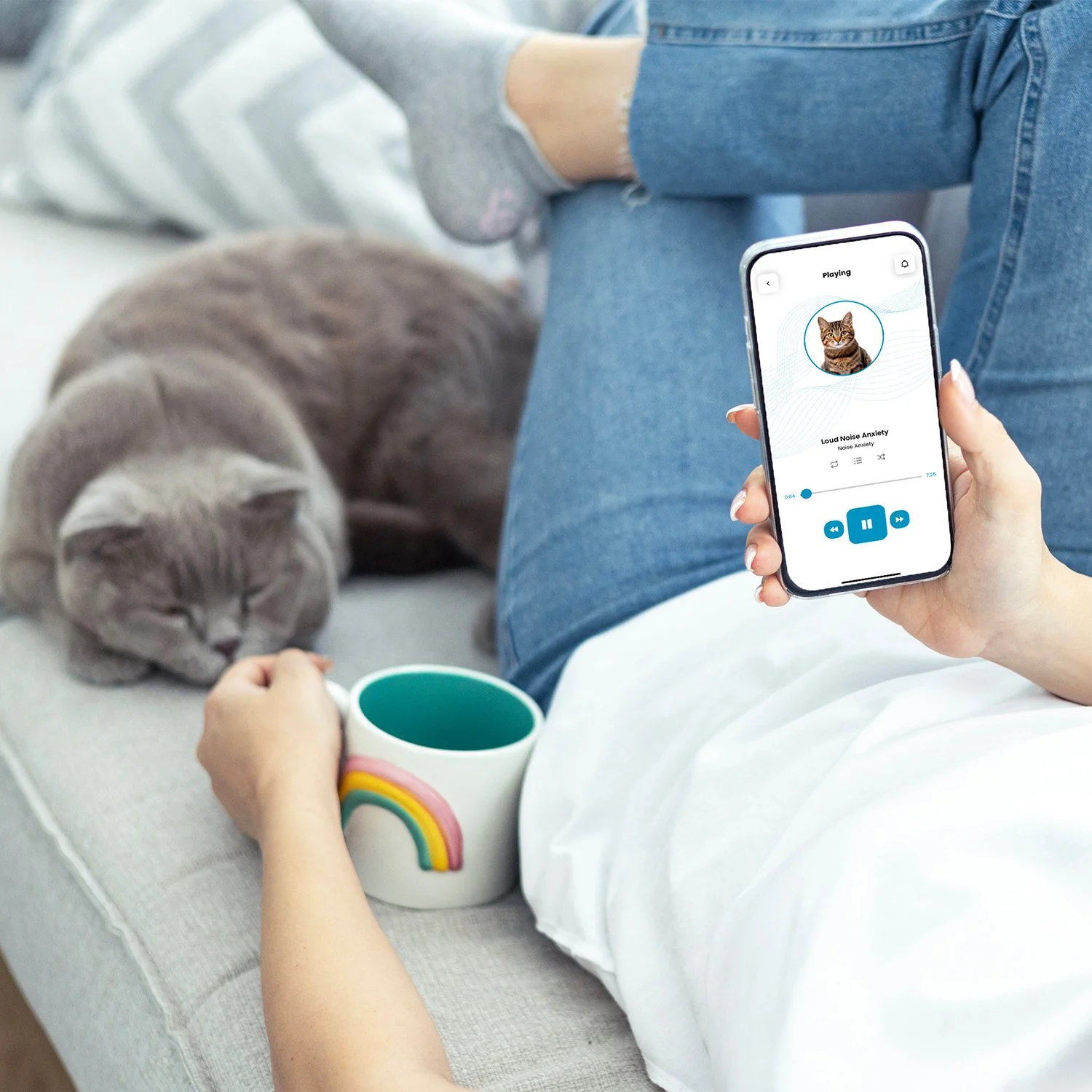
Pet Acoustics+ App
Today, feline hearing-aware sound care is available to cat parents around the world through the Pet Acoustics+ App.
The app allows families and veterinary teams to:
access calming sound therapy created specifically for the feline auditory system
support emotional regulation during transitions, recovery, and environmental change
use the digital pet hearing screening tool to better understand how their cat hears
The Pet Acoustics+ App is available worldwide on both the Apple App Store and Google Play, making hearing-informed, species-specific sound care accessible wherever your cat feels safest—most often, at home.
Why Hearing Awareness Matters More Than Ever
Many behavior concerns in cats are addressed without ever considering hearing.
But when a cat:

startles easily
becomes withdrawn
vocalizes excessively
avoids handling
the sensory system and the nervous system are often closely involved.
Understanding how your cat hears allows you to interpret behavior more accurately—and respond with compassion rather than frustration.
A Gentle Reminder
As both a cat parent and a sound behaviorist, I want you to know this:
Hearing loss does not take away your cat’s ability to enjoy life, connection, or comfort.
But failing to recognize hearing changes can quietly increase stress and misunderstanding.
With awareness, a hearing-friendly home, gentle sensory support, and tools such as digital hearing screening and species-specific sound therapy, cats with hearing changes can continue to live confident, calm, and emotionally balanced lives.
Your cat is still listening—
just in a different way.
See our research on Feline Hearing in our published research in the International Animal Health Journal