
The Calm Shelter Initiative
THE CALM SHELTER INITIATIVE
What If a Shelter Could Sound Like a Home?
We're launching a pilot to bring species-specific sound therapy into shelter kennels — free — and we'd like a handful of shelters to help us prove it out.

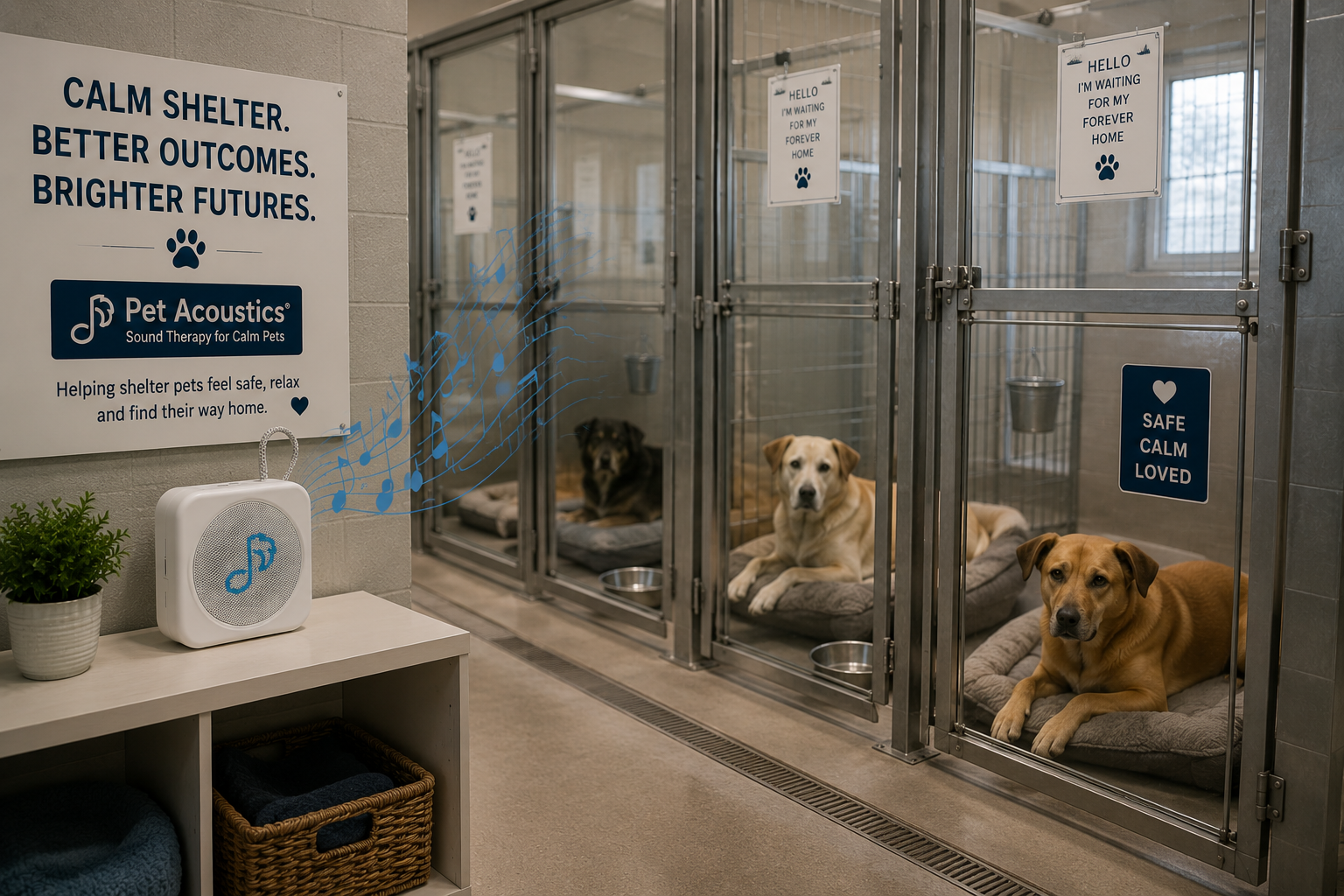
Walk into almost any animal shelter and the first thing you notice isn't the animals. It's the sound. Barking that sets off more barking. Metal doors, hard floors, voices echoing down a concrete corridor. For the people who work there, it fades into background hum. For the dogs and cats living in it, it never does.
I've spent more than twenty-five years studying how companion animals actually hear — not how we assume they do. Dogs and cats register frequencies we can't, and they react to sound far more sharply than we tend to credit. A kennel that feels merely "busy" to a human can read as relentless to an animal whose hearing was built for a quieter world. That mismatch has a cost, and it shows up in the body: pacing, panting, withheld appetite, the kind of stress that makes an adoptable animal look like a difficult one.
Sound is the variable nobody adjusts
Shelters work tirelessly on the things they can control — cleanliness, enrichment, medical care, foster networks, adoption events. Sound is rarely on that list, not because it doesn't matter but because it has never come with a practical lever to pull. You can't ask a building full of stressed animals to be quieter.
That's the gap Biometric Sound Therapy is built to close. It isn't background music for the lobby, and it isn't white noise. It's sound engineered specifically for the hearing range and sensitivities of dogs and cats — tuned to settle the nervous system rather than simply mask the room. The goal is straightforward: lower the ambient stress load so the animals can rest, recover, and show up as themselves when an adopter walks by.
Introducing the Calm Shelter Initiative
The Calm Shelter Initiative is a pilot built to put that idea to the test. We're placing Biometric Sound Therapy in three to five shelters, at no cost, to study how it changes the day-to-day experience inside the kennels.
Deliberately, we're keeping the scope tight. One intervention, one question: does calmer sound make a measurable, observable difference for the animals and the staff who care for them? No upsell, no equipment to buy, no strings. We provide everything; participating shelters simply use it and tell us what they see.
Why now, and why a pilot
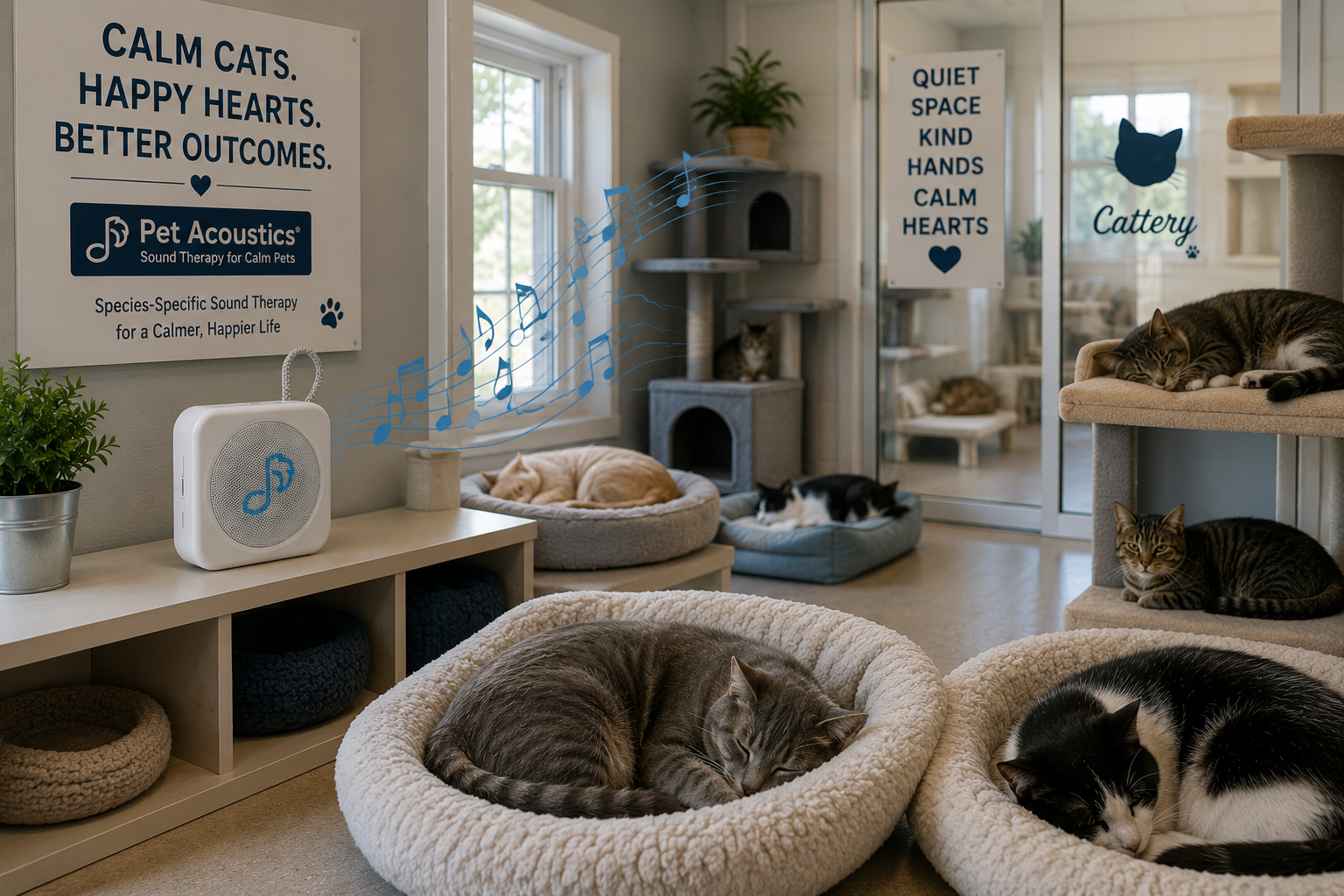
Because the right way to make a claim is to earn it. Rather than tell shelters what sound therapy will do for them, we'd rather a small group of partners put it to work in real conditions — with their animals, their floor, their honest read — and let the experience speak. A focused pilot lets us learn fast, document carefully, and build something other shelters can trust later.
If your shelter wants in
We're looking for a few committed partners for this first cohort. If easing the stress load on your animals — and the people who care for them — sounds worth a conversation, I'd love to hear from you. There's no cost to participate and no obligation beyond your willingness to use the therapy and share what you observe.
A quieter, calmer kennel isn't a luxury. For an animal waiting for a home, it might be the difference between being overlooked and being chosen. Let's find out together.
Janet Marlow
Founder & CEO, Pet Acoustics · Certified Sound Behaviorist™